
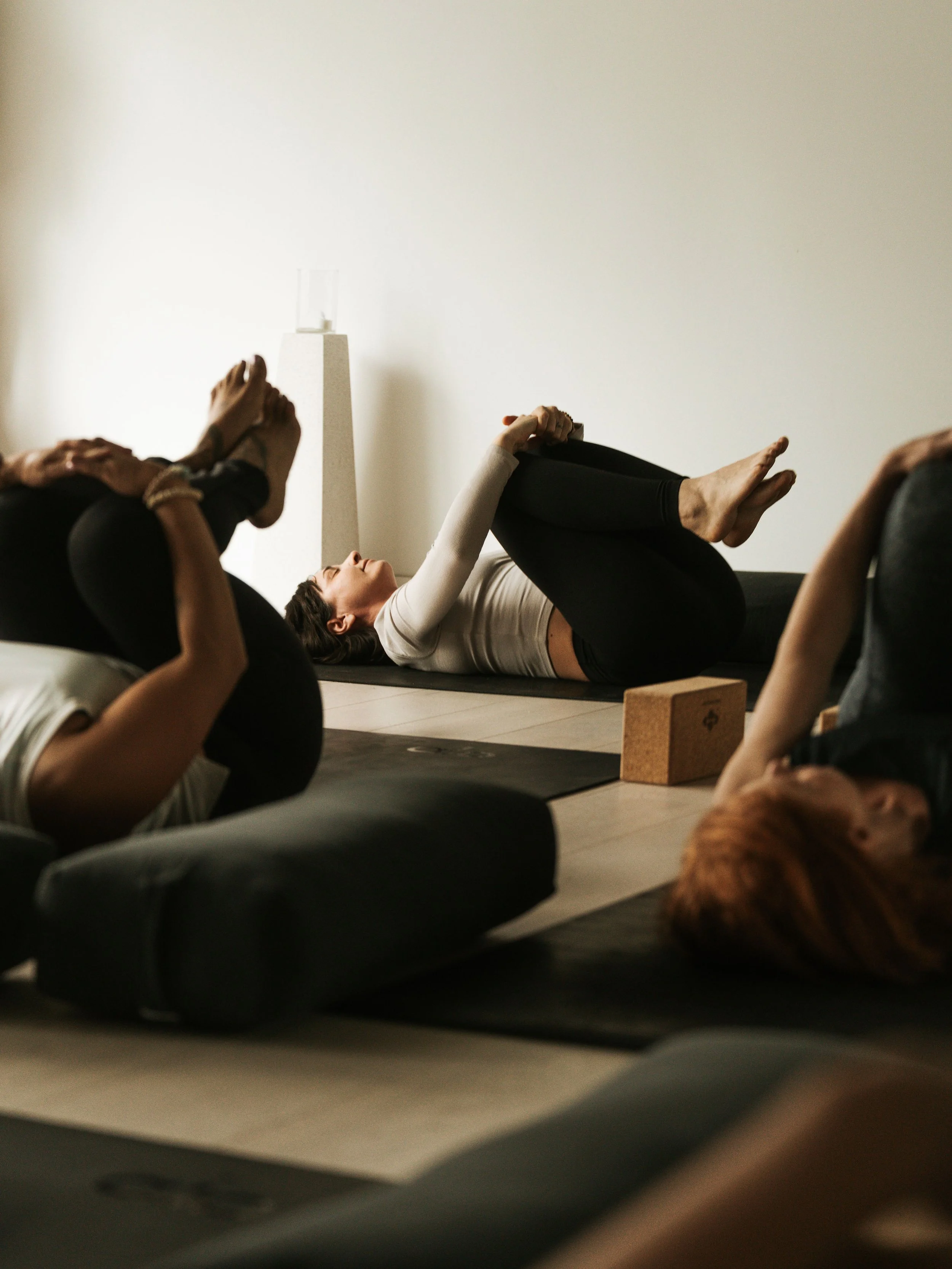
Restorative Yoga
build a foundation
What Is Restorative Yoga?
Restorative yoga is a soothing, gentle practice that invites your body and mind into deep rest. Instead of moving through active sequences, you settle into supported poses that help your nervous system release tension and return to a state of calm. This practice focuses on stillness, breath, and mindful awareness so you can unwind at a pace that feels nourishing.
Restorative yoga creates space for your body to soften and for your mind to settle. It is a practice of presence, allowing you to reconnect with yourself in a way that feels safe, comforting, and deeply restorative.

Benefits of Restorative Yoga for Stress and Healing
Restorative yoga is one of the most effective practices for reducing stress and supporting emotional and physical healing. When your body is fully supported, your nervous system shifts into a state of rest where deeper healing can begin. This release often brings greater clarity, improved sleep, and a more balanced emotional state.
The practice also helps reduce muscle tension and supports your body’s natural recovery processes. As your mind becomes quieter, you gain access to inner stillness and a renewed sense of peace. Over time, restorative yoga strengthens your ability to handle challenges with more grace and resilience.
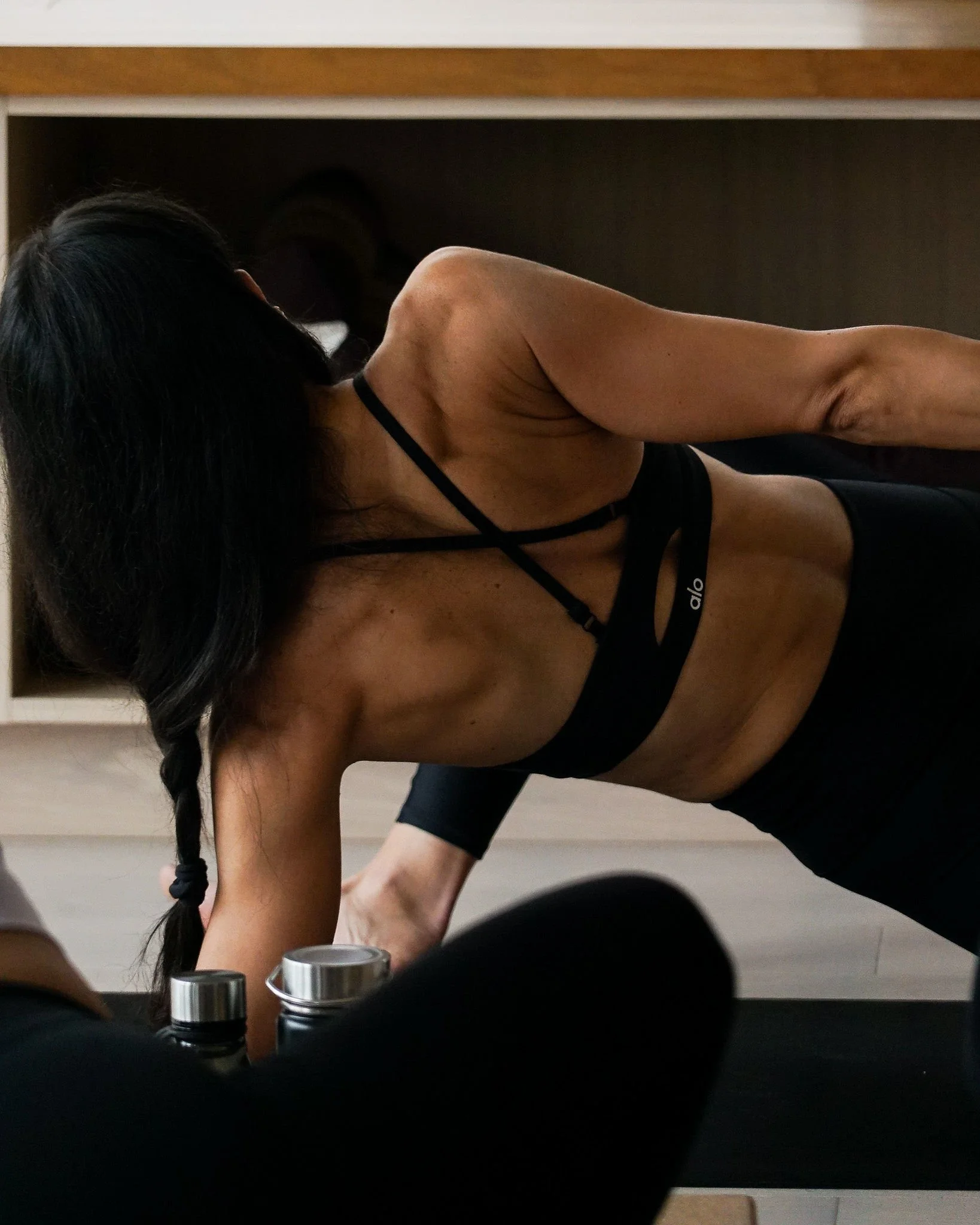
CLASS OVERVIEW
What to Expect in a Restorative Yoga Class
A restorative yoga class at Ritual Urban Retreat is calm, comforting, and intentionally spacious. You will be guided into a series of supported poses using props to help your body relax without effort. Each posture is held for several minutes, giving you time to settle, breathe, and unwind.
The atmosphere is quiet and grounding. Soft lighting and minimal movement help your mind shift into a slower rhythm. Your instructor will provide gentle guidance while encouraging you to honour your own pace. There is no expectation to perform or achieve. Your experience is personal and deeply supported.
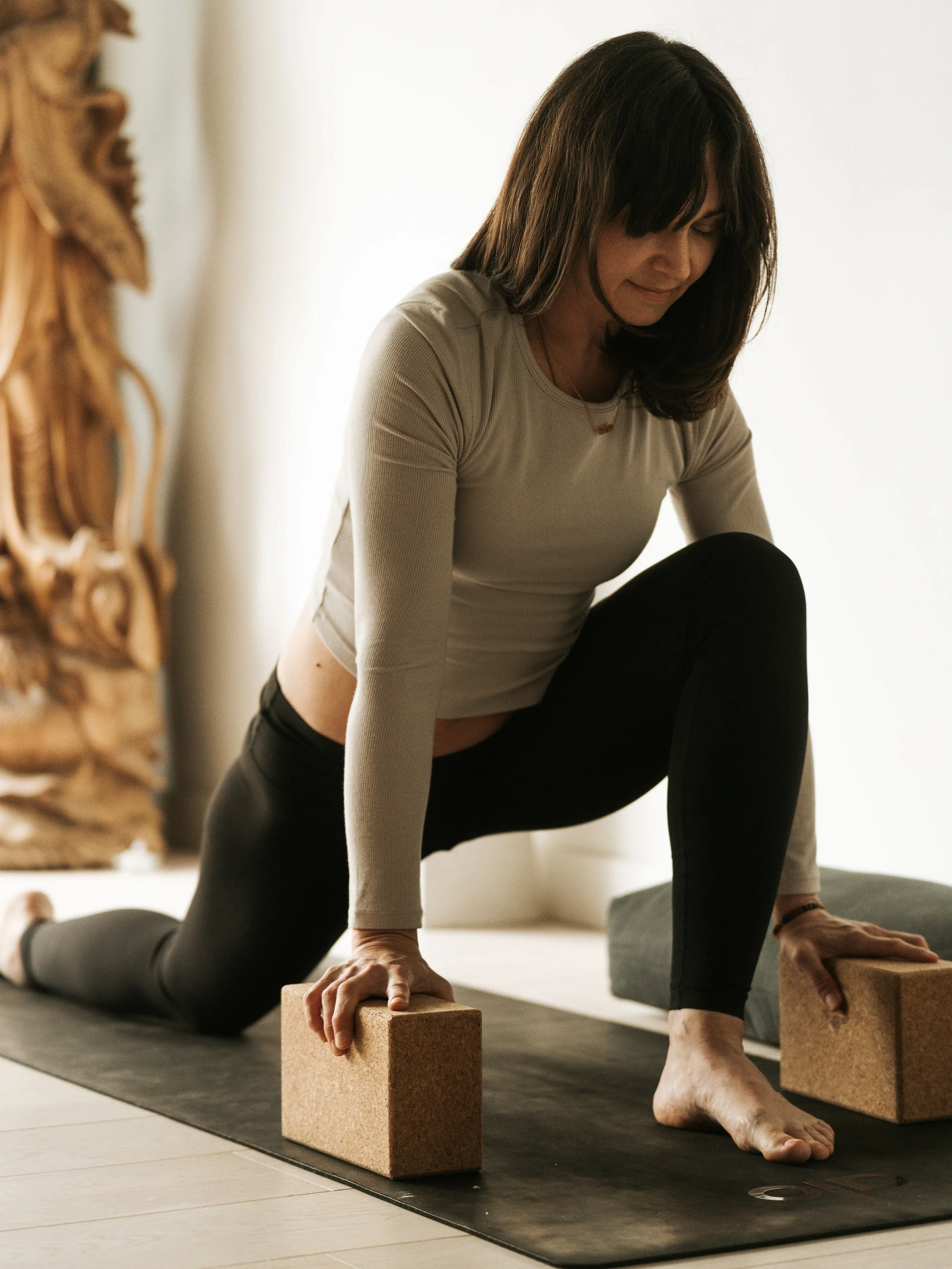
Restorative Yoga at Ritual Urban Retreat
restorative Yoga at Ritual
Restorative yoga at Ritual Urban Retreat is more than a class. It is a sanctuary for your nervous system and a place to reconnect with your inner calm. Our instructors guide with presence, compassion, and an understanding of how important rest is for healing and balance.
The environment is intentionally created to help you feel safe and held. Every session invites you to release the noise of the outside world and settle into stillness, where your breath and body can move toward harmony. Ritual is a place where rest is honoured and where healing is supported with care.
Who Can Benefit from Restorative Yoga?
who it’s for
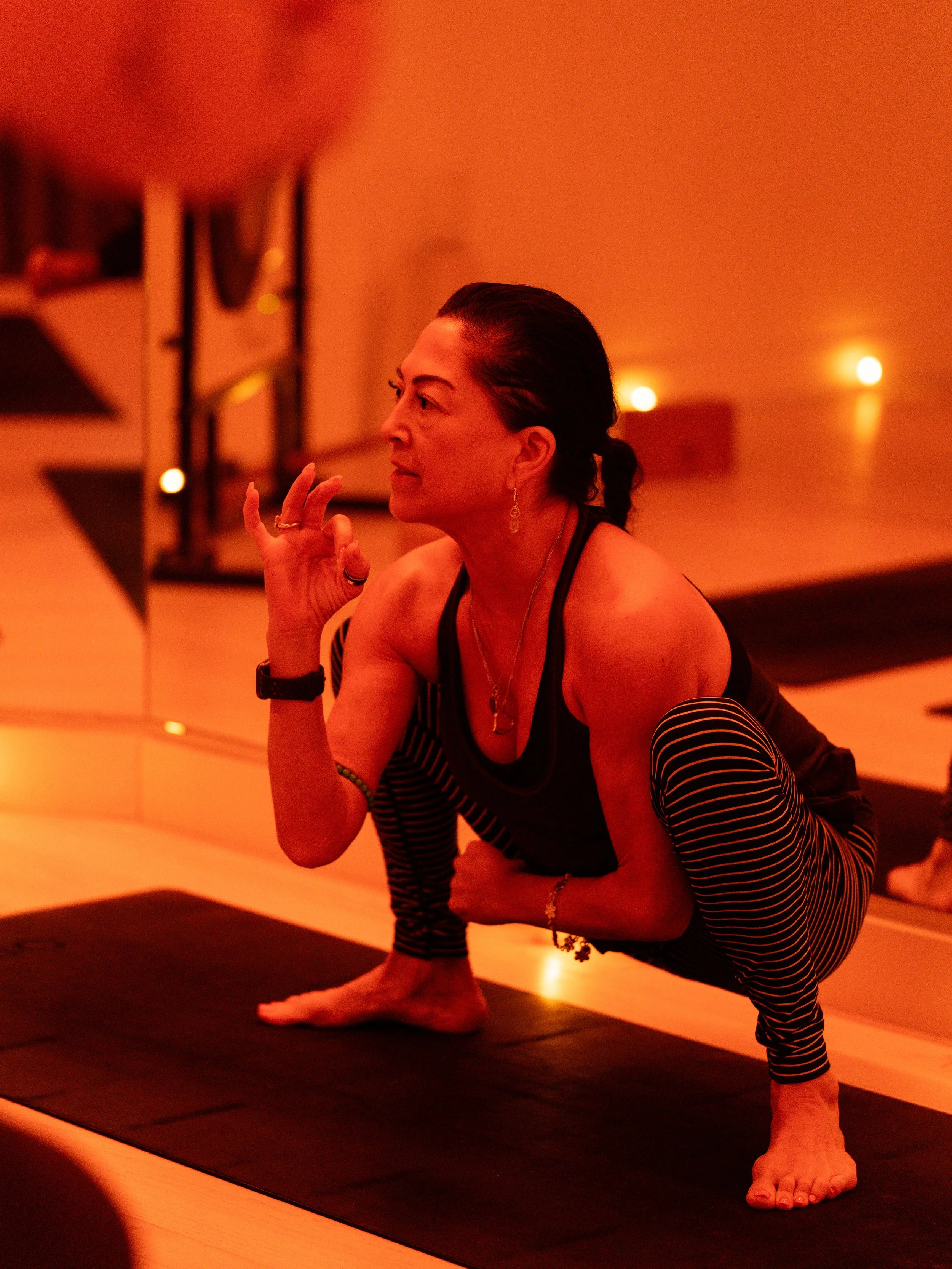
Restorative yoga is supportive for anyone who is seeking calm, healing, or a softer approach to movement. It is especially helpful for those experiencing stress, burnout, emotional overload, or physical fatigue. It is equally valuable for individuals recovering from injury or navigating life transitions that require tenderness and support.
This practice welcomes all bodies, all levels of experience, and all stories. If you are longing for rest or hoping to reconnect with yourself in a gentle and meaningful way, restorative yoga can offer the grounding you need.
Breathwork and Meditation in Restorative Yoga Practice
breathwork & Restorative yoga
Breathwork and meditation naturally blend with restorative yoga to deepen your sense of presence and release. As your body rests, your breath becomes a steady and supportive guide. Slow, mindful breathing signals safety to your nervous system, allowing your mind to settle into a peaceful rhythm.
Meditation invites you to explore your inner landscape with curiosity and compassion. These moments of awareness create space for emotional clarity and a deeper connection to yourself. Together, breathwork, meditation, and restorative yoga form a practice that nurtures every part of your wellbeing.
ADDITIONAL
INFORMATION
Learn more about Restorative Yoga at Ritual Urban Retreat, Vancouver’s wellness studio for conscious well-being.
-
Restorative yoga is a physical practice that focuses on conscious relaxation through supported stillness.
Each pose is held for an extended period using props such as folded blankets, bolsters, and blocks. This allows the body to settle into one pose without strain, creating the conditions to consciously relax rather than actively stretch or engage.
As the body becomes more supported, breathing often slows and attention shifts inward. This type of practice is commonly associated with activation of the parasympathetic nervous system, sometimes referred to as “rest and digest.”
Common restorative yoga poses such as child’s pose, reclining bound angle pose, legs up the wall, and corpse pose are used to gently position the body while encouraging stillness.
Rather than focusing on effort, the practice is geared toward allowing muscles to release and observing how the body responds over time.
-
While restorative yoga can be explored by many, it is often chosen by individuals looking for a slower, more supported practice.
People experiencing physical tension
This practice may offer a space to explore areas such as the shoulders, jaw, or low back through stillness and supported positioning.Those with busy or high-pressure routines
Restorative yoga can provide a contrast to fast-paced schedules by introducing periods of stillness and conscious relaxation.Beginners or those new to yoga
Because each pose is supported, it can serve as an accessible introduction to yoga in a safe space without emphasis on performance.Active individuals or athletes
Some use restorative yoga alongside other fitness or training routines as part of a recovery-focused practice.Those navigating stress or sleep challenges
The slower pace and emphasis on breathing may support awareness of the nervous system and overall well being. -
Restorative yoga is often experienced gradually, with subtle shifts over time.
After one class
You may notice a slower pace of breathing or a general sense of calm following the session.After a few classes
Some people report becoming more aware of areas of tension, such as hips or shoulders, and how they respond to stillness.With consistent practice
There may be a greater familiarity with consciously relaxing, along with a deeper sense of ease during and after practice.This is a practice that unfolds progressively and can be approached in your own way, depending on your needs and schedule.
-
Preparing for restorative yoga is simple and requires minimal equipment.
What to wear
Comfortable, warm layers are recommended, as the body is mostly still. Socks can also support comfort.What to bring
Water bottle
We provide yoga mats, folded blankets, bolsters, and straps to support each pose.
Arriving a few minutes early can help you settle into the space and begin to slow your breath before the session begins.
-
Restorative yoga can be integrated with other offerings at Ritual depending on how you structure your routine.
After more active classes (Flow, Hot, or Power Yoga)
Some people use restorative yoga to transition from movement into stillness.Before breathwork sessions
It may serve as a gentle way to prepare the body for deeper breathing practices.As part of recovery
It can be included between more active training days or fitness classes.Alongside sauna or cold plunge
These experiences are sometimes combined as part of a broader approach to well being.Within this context, restorative yoga becomes one option within a wider system of practices available at Ritual.
-
Restorative yoga focuses on supported, long-held poses using props, with minimal muscular effort. The emphasis is on conscious relaxation rather than strength or flexibility.
-
Classes are typically 60 minutes, with a slow pace and extended time spent in each pose.
-
This practice is generally accessible, as props are used to support each pose and reduce physical strain.
-
Wear comfortable, warm layers and bring a water bottle. Mats, bolsters, folded blankets, and other props are provided.
-
The slower pace, supported poses, and breathing focus may influence how the body experiences stress and relaxation, which some people associate with improved rest.
-
How is Restorative Yoga different from Deep Stretch or Yin Yoga?
Restorative Yoga: fully supported poses, minimal effort, emphasis on stillness
Deep Stretch Yoga: slow movement with some muscular engagement
Yin Yoga: longer holds targeting connective tissue with moderate intensity
Each approach offers a different experience depending on your preference and goals.
-
Yes! Showers are available, with shampoo, conditioner, and body wash provided. Towels are complimentary for members and available to non-members for a $3 fee.